Published
7 MIN READ
AI Lead Qualification: What It Does Before the Sale
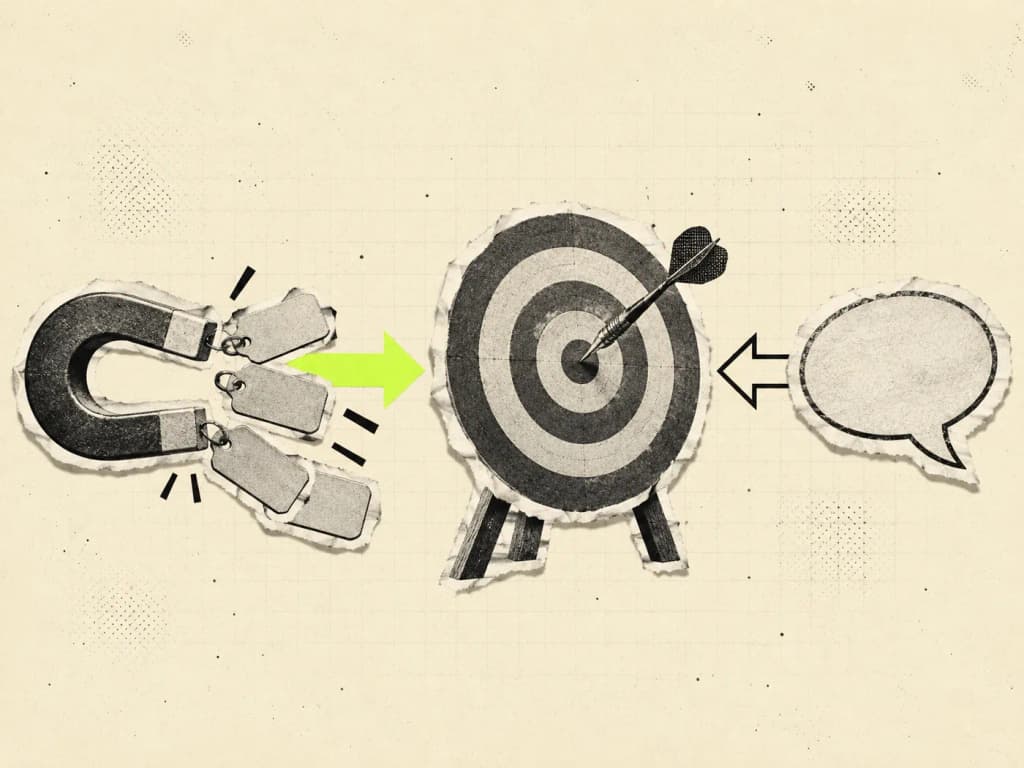

AI lead qualification is the workflow in which an agent talks to the contact, collects signals of need, budget, timing and authority, scores the lead and decides whether it goes to a sales rep, to nurturing or to closing out. Sales gets the conversation summary and the context in the CRM, not a cold queue of names.
RD Station's guide to lead qualification, updated on October 22, 2026, points out that qualifying means separating those with buying potential from those who are not ready yet, so the sales team spends time where the conversation pays off. The same text cites RD Station's 2026 Marketing and Sales Panoramas: 75% of companies did not hit their targets the previous year, and only 33% have truly structured sales processes.
At Wama, this kind of workflow enters the AI assessment for companies like any other candidate process: it only moves forward if there is volume, written criteria and someone responsible for review. It is the same filter we use to decide which process to automate with AI first, applied to the front door of sales.
What does AI lead qualification actually do?
AI does not replace the sales rep. It handles the stage that happens before the meeting: the initial conversation, data collection and classification. ElevenLabs' article on AI lead qualification pipelines, from August 7, 2026, describes this setup: the agent asks, scores and routes; the human closes.
In practice, the agent:
1. Receives the contact on the channel the company already uses (WhatsApp, website chat, form or phone).
2. Asks one question at a time, in the company's tone, without an interrogation.
3. Records the answers and matches them against the criteria sales has defined.
4. Assigns a score or a status (hot, warm, cold, out of profile).
5. Routes to the right rep, to a nurturing sequence or to a polite close-out.
The channel matters. When the conversation starts on WhatsApp, the rules and costs of an AI agent on WhatsApp come into play from day one. Without CRM integration, the conversation summary dies in the chat and the rep goes in blind.
What does AI need to collect before calling in the sales rep?
Before turning on the agent, the sales team writes down the list of what it needs to know. Without that list, the AI improvises and the handoff becomes a generic summary. HubSpot's guide on how to qualify your company's leads, updated on July 10, 2026, organizes the reading into five axes: need, fit, budget, authority and timing.
In operation, that turns into concrete questions, not acronyms:
Need: what problem the person wants to solve right now.
Fit: whether the product or service matches their profile (size, industry, stack).
Budget: whether there is money set aside or an approximate range, with no pressure to close.
Authority: whether the person talking decides or is just researching.
Timing: whether the purchase is this quarter, next quarter or still undefined.
The AI asks, records and compares against the rule. Whatever falls outside the profile (a company too small, an industry the company does not serve, an unrealistic deadline) goes to nurturing or close-out. Whatever matches goes to sales with the full package. That package also needs to reach the CRM: CRM integration with AI defines what the agent can read and write, with minimal access. The framework of LGPD (Brazil's data protection law) and artificial intelligence comes into the same conversation, because the agent handles contact data.
How should the handoff to sales happen?
The handoff is the point where AI either delivers value or ruins the sale. The rep needs to open the conversation knowing what has already been said. A good handoff includes, at a minimum:
1. Conversation summary in plain language, with the literal answers on critical points.
2. Score and reason: why the lead was classified that way.
3. Suggested next step: call, schedule a demo, send a proposal or wait.
4. Updated CRM fields: funnel stage, source, owner and date.
Without that, the rep repeats questions the lead has already answered and trust drops. With it, the meeting starts halfway through. In Wama's projects, every AI output goes through human review before it reaches the client; in qualification, the equivalent is sales reviewing a sample of conversations in the first week and adjusting the script when the AI gets the tone or the criteria wrong.
If the next step is a proposal, the workflow connects to AI proposal and quote automation: qualification delivers the context; the proposal uses the company's price list and approval limits.
Written criteria before turning on the agent
The criteria come before the tool. Without written rules, AI only speeds up the mess. The minimum list covers four blocks:
| Block | What to define in writing |
|---|---|
| Profile | Who is in, who is out, company size and industry |
| Signals | Mandatory questions and the weight of each answer |
| Exceptions | What AI never decides on its own (discounts, deadlines, promises) |
| Handoff | When it escalates to a human and what the human receives |
The human review screen for AI shows how to make visible what the AI did and what still needs a look. In qualification, review starts with the sample of conversations and continues with weekly adjustments to the script.
Wama does not sell boxed AI solutions: the AI Assessment builds a custom plan from the company's processes. AI lead qualification only enters that plan when sales can already say, on one page, what a hot lead is and what is a waste of time.
Common mistakes
Starting with the tool. Choosing the agent before writing the criteria. The script comes first.
Letting AI negotiate. Price, discounts and deadlines outside the price list stay with human approval.
Not saving to the CRM. If the summary stays only on WhatsApp, the team loses the history at shift change.
Repeating questions at handoff. A rep who does not read the summary wastes the conversation the AI already had.
Ignoring the LGPD during collection. Contact and profile data call for a legal basis and controlled access; without written rules, collection becomes a risk.
Measuring only lead volume. Without a baseline for time to first meeting and no-show rate, there is no way to know whether AI helped.
Frequently asked questions
Does AI lead qualification replace the SDR?
No. It covers screening and initial data collection. The SDR or the closer step in when the contact has already shown need, fit and timing. AI reduces the time spent on cold leads and delivers context; the sales conversation and the negotiation stay human.
Do I need a CRM to qualify leads with AI?
Yes, in practice. Without a CRM, the agent can still talk, but the team loses the history, the score and the lead owner. The handoff only works when the status and the summary land in the same place where sales works.
Which channels work best for qualification?
WhatsApp, website chat and forms with an immediate reply. The channel where the lead already responds is the right one. Opening a new channel just for the AI usually creates an empty queue, wrong expectations and cost without a single useful conversation.
How do I know if the AI is qualifying poorly?
Compare the rate of leads accepted by sales, the time to first meeting and the no-show rate with the baseline from before. If sales sends back many leads or complains about the summary, the criteria or the script are too loose.
Where should the company start?
With the process that has volume and clear rules, measured for one or two weeks. The map of where to use AI in the company helps you choose the area; the stages of implementing AI in companies turn that choice into a plan with a baseline.
If your company already attracts contacts and sales wastes time on cold leads, AI lead qualification is a good first case: written criteria, an agent on the right channel and a clean handoff to whoever sells. To map where this fits into your operation, talk to Wama.