Published
8 MIN READ
AI Implementation Cost: Tokens, Exchange Rates and IOF
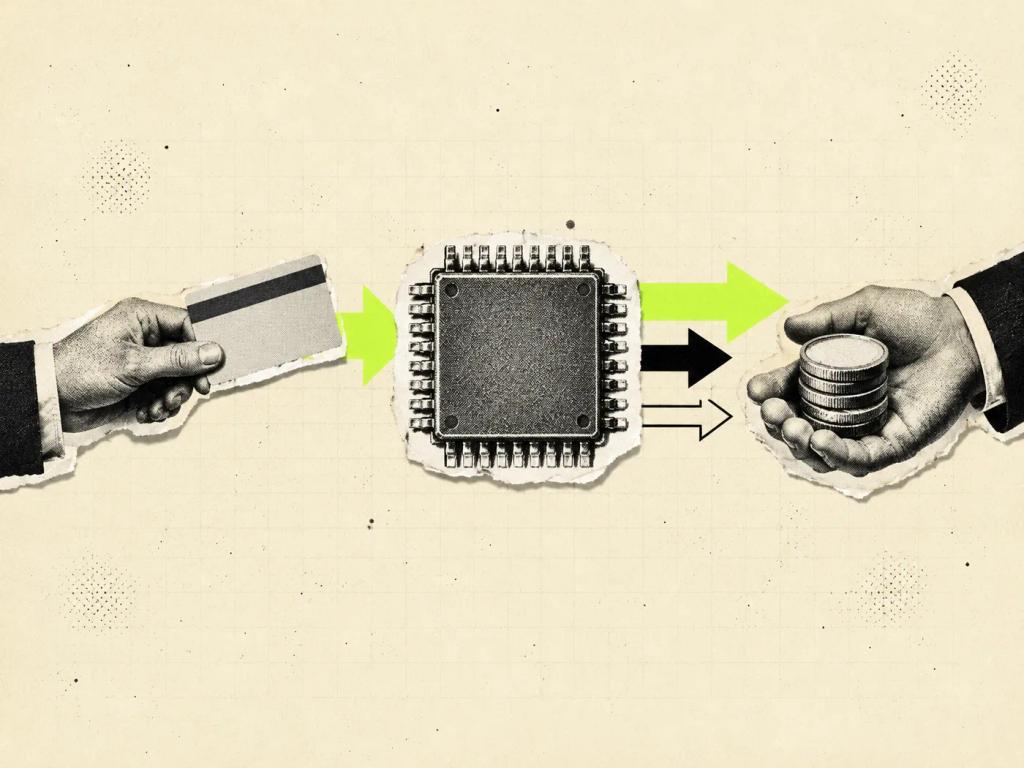

How much it costs to implement AI depends on three bills that usually come mixed together: the project, which connects AI to the company's systems and screens; model usage, charged in dollars per token; and the operation of the people who review and adjust. The most miscalculated one in Brazil is the second, because the exchange rate and IOF, Brazil's tax on foreign card purchases, are left out of the budget.
The pages at the top of search results publish vendor price ranges, almost always without saying where they come from. This article does the math with the official OpenAI and Anthropic price tables, checked on October 24, 2026, with the Central Bank exchange rate and with the tax charged on the credit card bill.
At Wama, AI goes into code and automation, with Claude Code and Framer's agents, and every result goes through human review before it reaches the client. That review is also a cost and goes into the math. How this workflow works on the inside is in the article on Claude Code in development.
What are the three bills for anyone implementing AI?
An AI budget has three lines with different billing logics, and adding up all three is the only honest way to compare proposals.
Project. Paid once: flow design, data preparation, integration with in-house systems, review screens and testing. It grows with the number of connected systems, as the article on CRM integration with AI shows.
Usage. Paid every month, in dollars, for the volume of text going into and out of the model. It varies with usage, not with the contract.
Operation. Hours for whoever monitors the answers, fixes the knowledge base and adjusts the instructions. It vanishes from the budget because it doesn't arrive as an invoice.
At Wama, AI sped up the build, not the decision: the total project timeline didn't change. So be wary of a cheap project justified by AI speed. What takes time is deciding what the agent can read and do, and every system connected to it, including through the MCP protocol in companies, is one more decision.
How does per-token billing turn into a bill in reais?
Per-token billing turns into a bill in Brazilian reais in three steps: the dollar price from the vendor's table, the day's exchange rate and the card's IOF. A token is the chunk of text the model reads or writes, and the tables separate what goes in (instructions, history, documents) from what comes out (the answer).

In the official OpenAI price table, checked on October 24, 2026, gpt-6.1-sol costs US$ 2 per million input tokens and US$ 10 per million output tokens. In the Anthropic price table, on the same day, Claude Sonnet 5.5 has the same US$ 2 and US$ 10. The small models from both, gpt-6-luna and Claude Haiku 5.5 (the latter for requests of up to 100,000 tokens), cost US$ 0.10 and US$ 0.50: twenty times less.
Then comes the exchange rate. The Central Bank's PTAX selling rate, Brazil's official reference rate, closed at BRL 5.0377 on October 23, 2026. And Decree 12,499 of June 11, 2025 set IOF at 3.5% on purchases of goods and services abroad made with a card issued in Brazil. The bank also applies its own spread, which varies by issuer and is left out of this calculation.
Example: a customer service agent with 5,000 conversations per month
The example below is illustrative, built to show the math, and it isn't a client quote. Imagine an agent that answers 5,000 conversations per month, with three model calls in each one. Each call takes 6,000 input tokens (fixed instruction, an excerpt from the knowledge base and history) and returns 500 output tokens. The excerpt that goes into each call is the subject of the article on AI agents with a knowledge base.
Line item | Mid-tier model | Small model |
|---|---|---|
Calls per month | 15,000 | 15,000 |
Input tokens | 90 million | 90 million |
Output tokens | 7.5 million | 7.5 million |
Cost in dollars | US$ 255.00 | US$ 12.75 |
In reais, at the PTAX rate of 10/23/2026 | BRL 1,284.61 | BRL 64.23 |
With 3.5% IOF | BRL 1,329.57 | BRL 66.48 |
The difference between the two columns is the most expensive decision in the project. It's worth testing whether the small model handles most conversations before paying twenty times more for all of them. If the agent works through WhatsApp, Meta charges separately, as explained in the article on the cost of an AI agent on WhatsApp.
Which rules change the price without showing up in the budget?
Four rules in the official tables move the bill more than switching vendors, and almost no budget mentions them.
Caching the fixed instruction. The part repeated in every call can be read from cache for US$ 0.10 per million tokens on both mid-tier models. In the example, if 4,000 of the 6,000 tokens are fixed, usage drops from US$ 255 to US$ 141, not counting the cost of writing the cache.
Batch processing. Tasks that can wait, like classifying documents overnight, cost half price with both vendors.
Processing region. Restricting where data is processed costs 10% more: OpenAI charges the surcharge on models launched from March 5, 2026 onward, and Anthropic applies a 1.1 multiplier when processing is restricted to the United States. It's a choice that comes out of the conversation about LGPD, Brazil's data protection law, and artificial intelligence.
Tokenizer. Anthropic notes that Claude 4.7 and later models use a tokenizer that generates about 30% more tokens for the same text. The same price per token doesn't mean the same bill.
Then there's request size. At OpenAI, calls with more than 272,000 input tokens move to the long-context table, where input costs double. An agent that dumps entire documents into every question pays that difference without noticing.
Common mistakes in AI budgets
The mistakes that most distort the cost of AI for companies show up before the first bill, while still in the proposal.
Comparing vendors only by price per token. With different tokenizers, the same conversation generates different volumes. Compare by running the same test conversations on both models.
Forgetting the exchange rate and IOF. There are well-ranked pages in search that still claim IOF on international purchases was eliminated. Decree 12,499 sets it at 3.5%, and the bill arrives with it.
Leaving the API account on the vendor's card. In Wama's website projects, the project is transferred to the client's account and the subscription stays on the client's card. In Wama's view, the API account should follow the same rule, for the reason explained in the article on who owns the code of custom software.
Not setting a spending cap. An agent with a loop bug calls the model nonstop. Set a monthly limit and a usage alert before opening it to the public, and record the rule in the company's AI use policy.
Budgeting operation as zero. Someone needs to read answers, fix the knowledge base and adjust instructions every month. Without someone responsible, quality drops and nobody notices until a customer complains.
Frequently asked questions
How much does it cost to implement AI in a small business?
There's no single price, because project, usage and operation vary with scope. Usage is the part you can calculate in advance: in this article's example, 5,000 conversations per month cost from BRL 66.48 to BRL 1,329.57 with IOF, depending on the model. The project depends on how many systems the AI accesses and the review screens it requires.
Does IOF apply to the AI API bill?
It does when the charge is in foreign currency on a card issued in Brazil. Decree 12,499 of June 11, 2025 set IOF at 3.5% on purchases of goods and services abroad made by card. The tax is calculated on the amount already converted into reais, and the bank's spread comes on top.
Is a smaller model always cheaper?
It's cheaper per token, but not always on the final bill. If the small model gets it wrong and the conversation has to be redone or handed to a person, the cost comes back through operation. The safest path is to test the same conversations on both models and measure how many the small one resolves without human help.
Can you predict the monthly AI bill?
You can estimate it, not fix it. The math needs the number of conversations, the calls per conversation and the input and output tokens of each call. A short pilot with real usage delivers these numbers better than any spreadsheet. With them in hand, set a spending cap and a usage alert on the vendor's platform.
Who should own the AI API account?
The company that uses the AI. The account holds the access key, the usage history and the chosen data settings, such as the processing region. If it's in the name of whoever did the implementation, switching vendors becomes a migration, and the company loses the history that shows how much the AI really cost.
If your company is planning a product or system with AI and wants to separate the three bills before hiring, talk to Wama.