Published
9 MIN READ
Custom software: who owns the source code
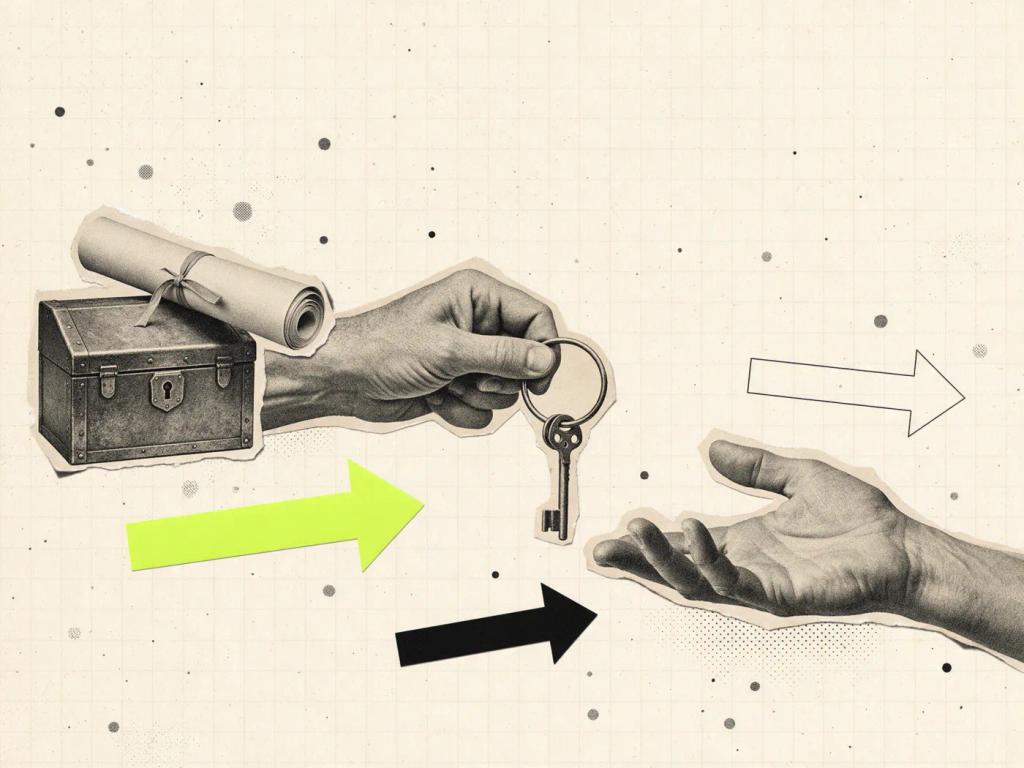

In custom software, Brazil's Software Law gives the rights to the program to the company that commissioned the development, unless otherwise stipulated. In practice, the contract decides: it can assign everything to the client or only license the use. That is why source code, repository, and documentation need to be in writing before the first line.
The top search results for custom software development, reviewed between 2025 and August 2026, explain stages, timelines, and price. None of the seven read for this article says who owns the code when the contract ends, or what changes when part of it was written by AI.
At Wama, this question separates two types of project. The corporate website is built in Framer and delivered in the client's account; when the client requires owning the source code, the project goes to custom development, done by the studio itself. Logged-in areas, portals, and courses follow the same path, as a digital product project.
Who owns the code of custom software?
Under the general rule of Law 9,609/1998, the owner is whoever commissioned it, when the program is the object of the contract. Article 4 assigns the rights to the party contracting the services if the development was provided for in the contract or follows from the nature of the work contracted. The same sentence opens with "unless otherwise stipulated," and that is where the risk lies.
Two paragraphs of the same article complete the rule. Paragraph 1 says that, unless agreed otherwise, the vendor's compensation is limited to the agreed fee: without a royalty clause, the project price settles the account. Paragraph 2 reserves to the vendor what it created with no connection to the contract and without using the client's resources, information, or equipment.
The question usually comes up when the project stops being a showcase, which is when the website needs to operate and not just show.
Why the contract weighs more than the law
Because the law only decides what the contract left blank. A custom software contract can do two very different things with the same code: assign the economic rights to the client or grant a license to use. With an assignment, the company can modify, sell, and hire another team. With a license, it pays to use, and the vendor remains the rights holder.
A license is not a trap: Article 9 of the Software Law treats the use of a program as the object of a license, and that is how off-the-shelf tools are bought. The problem is paying the price of an exclusive project and receiving the terms of an off-the-shelf tool.
The second blind spot is the components the vendor already had. When the software house reuses internal libraries, Paragraph 2 of Article 4 keeps with it what was created outside your contract. Without a perpetual license for those pieces, the assigned code may not run without what was not assigned, and that blocks the method for taking a product from MVP to scale, which assumes a next team able to change what the previous one wrote.
For websites, Wama solves ownership another way: the project is transferred to the client's account and the subscription stays on their card. If the client wants to switch vendors, they take the website, domain, and account.
What does a custom software contract need to spell out?
Seven clauses solve most of the problem, from the assignment of rights to the exit plan. Without them, the code can be yours on paper and out of reach in practice.
Assignment of economic rights over code, interface, and documentation, with the compensation already included in the price.
Repository in the company's account from the first commit, with the vendor as a guest; the version history records who decided what.
Cloud, domain, database, and app stores under the client's CNPJ (the company's tax registration), with the vendor as a user, never as the account owner.
Technical documentation at delivery, using the Software Law's Article 11 yardstick for technology transfer: commented source code, descriptive report, internal functional specifications, diagrams, and flowcharts.
Third-party components and open libraries listed with each one's license, plus a perpetual license for any of the vendor's own modules that remain in the system.
Exit plan: timeline and method for handing over access, data, and knowledge when the contract ends.
Confidentiality and portfolio use: what the vendor can show and what stays closed.
Take the list to the lawyer who will review the contract: it organizes the conversation, it does not replace legal advice. And add to it the questions that apply to any digital vendor.
Code written with AI: who is the author
The person who created it, as long as there is human creation behind it. Brazil's Copyright Law defines the author as the natural person who created the work (Article 11) and protects computer programs (Article 7). Code generated by AI and reviewed, decided, and integrated by people rests on that human author, and the assignment transfers the result to whoever paid.

The INPI (Brazil's patent and trademark office) follows the same line: in a presentation on AI-generated works, from 2023, it treats the program as an intellectual creation and does not recognize as a work what the machine produces without human participation. An opinion piece in Conjur, from April 2026, recalls that the office has already refused to name an AI as inventor, in Opinion No. 24/2022.
The practical risk is in the proof. A column in TI Inside, from January 2026, reports that the question of who owns AI-generated code already comes up in audits and investment rounds, and recommends documenting human decisions, versions, and validations.
Under Anthropic's commercial terms, in force since June 2025, the customer owns the outputs and the company does not train models on their content; other tools have their own rules. Security is another conversation, covered in what is missing from an app built with AI before you charge.
At Wama, AI goes into code and automation, with Claude Code and Framer's agents, and every result goes through human reading before it reaches the client. That is how a coding agent works under review, and the review leaves the trail of human decisions the column recommends keeping.
Is it worth registering the software with the INPI?
It is when the system is a core asset of the business. Registration is optional, but the INPI's frequently asked questions, updated in July 2026, describe it as the way to prove authorship and ownership before the courts. The application is online, filed with a hash summary of the source code, and the certificate comes out within 10 calendar days.

Three details catch companies by surprise. The application requires an ICP-Brasil digital certificate from the rights holder, and signing through gov.br is not accepted, according to the basic registration guide. The INPI does not keep the code: the registered version stays with the rights holder, who needs to preserve the exact file whose hash was sent. And the registration is valid for 50 years, with no ten-year renewal fee, in Brazil and in the 176 countries of the Berne Convention.
Registration does not create the right: it proves a right that comes from the law and the contract. That is why the order is clause first and registration later, always in the name of whoever the contract names as rights holder.
How much does custom software cost in 2026
It depends on what each range includes. A Brazilian software house's guide, published in July 2026, puts a simple project or MVP between US$ 6,000 and US$ 16,000, a mid-size one between US$ 16,000 and US$ 50,000, and a complex one above US$ 50,000. Another, from the same month, cites US$ 8,000 to US$ 16,000, US$ 20,000 to US$ 60,000, and US$ 60,000 to US$ 100,000 or more.
The second guide also estimates US$ 100 to US$ 400 a month in cloud infrastructure for medium traffic, another reason for the account to be under the CNPJ of whoever pays.
At Wama, SaaS and MVPs run between US$ 4,000 and US$ 20,000, with a ceiling near US$ 40,000 depending on complexity, across a base of 50 to 100 quotes, and payment is 50% at the start and 50% on delivery. Before comparing proposals, it is worth understanding what moves the price of the first version.
Custom makes sense when the process is too specific for an off-the-shelf tool or when owning the code is a condition of the business. In other cases, an off-the-shelf tool, contracted by license, can solve it faster.
Frequently asked questions about custom software
Can the vendor reuse my system's code for another client?
It depends on the contract. With a full assignment, what was made for you can only be reused with your authorization. What the vendor created before, outside your contract and without your resources, remains theirs under Article 4 of the Software Law, and the contract should separate the two parts.
Are a license to use and an assignment of rights the same thing?
No. With an assignment, the economic rights pass to the company, which can modify, sell, and hire another team. With a license, the company pays to use and the vendor remains the rights holder. In custom software, paying the price of an exclusive project and receiving only a license is a mismatch that shows up when you switch vendors.
Who is the author of code generated by artificial intelligence?
In Brazil, the author is always a natural person, under Article 11 of Law 9,610/1998, and AI cannot hold copyright. Code generated with AI rests on whoever defined, reviewed, and integrated the result, and the history of versions and reviews proves that human participation.
Do I need to register the software with the INPI to own it?
No. Ownership comes from the law and the contract, and INPI registration is optional. It serves as proof of authorship and ownership in a dispute, with a certificate within 10 calendar days and validity of 50 years. For a system that is a core asset of the business, it is worth filing right after delivery.
What should you ask for at the delivery of custom software?
Source code in the company's repository, with version history; technical documentation with a descriptive report, specifications, and diagrams; cloud, domain, database, and store credentials under the client's CNPJ; a list of third-party components with their licenses; and the signed assignment agreement. Without these items, switching vendors gets expensive.
If you are going to commission a system and want to come out of it with the code, accounts, and documentation in the company's name, talk to Wama about custom development.