Published
8 MIN READ
SaaS Development: From MVP to Scale, With a Method
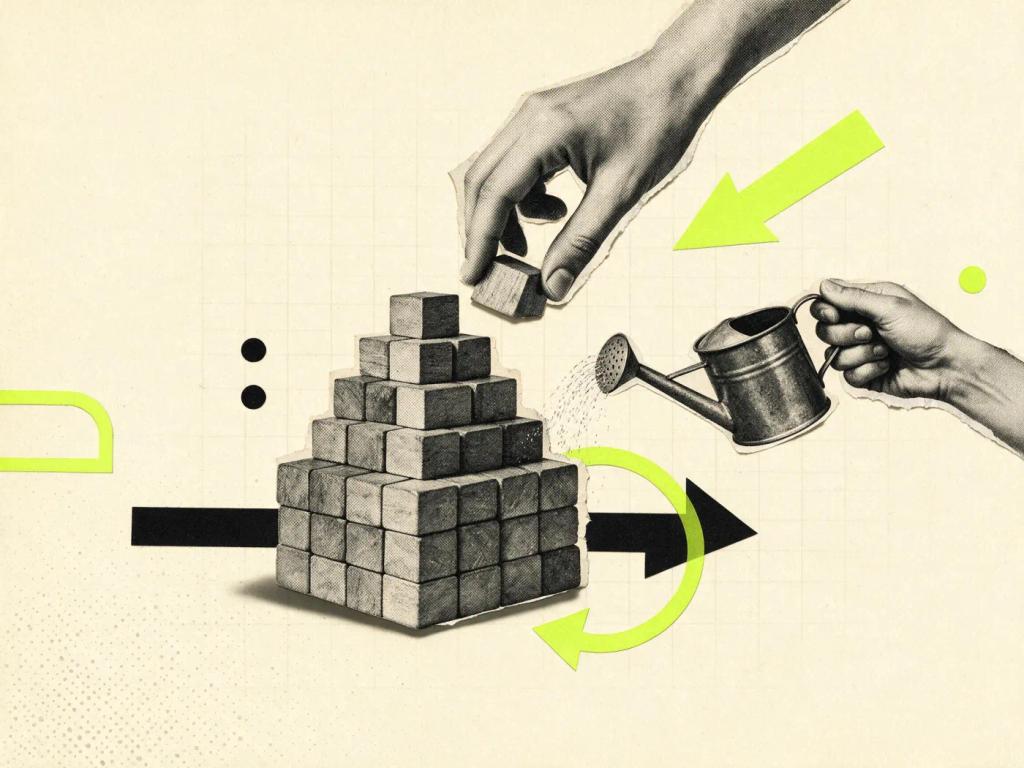

SaaS development is the process of turning a business hypothesis into software as a service: validating the problem, cutting the scope down to an MVP that delivers value, launching, measuring and evolving the product consistently. What defines the result isn't the number of features, but the quality of the decisions made at each stage.
I'm writing from inside the process. At Wama, I run digital projects end to end, from the first meeting to deploy, in a portfolio of more than 200 projects for brands like KFC Brasil, Camila Farani, Tera and Wiz Benefícios. This article is the map I wish every client read before deciding to build a SaaS.
Where does SaaS development start?
SaaS development starts with validating the problem, not with code. Before any screen, the founder needs evidence that real people would pay for the solution: conversations with potential customers, a waitlist, a manual operation that already works. Without that signal, the whole project becomes an expensive bet.
The product is usually preceded by the first public page of a company that's just starting out, which validates the pitch with far less effort than an MVP.
In practice, a lot of validation has already happened without anyone noticing. The spreadsheet the team updates every day, the customer service running on WhatsApp, the billing done by hand: all of that is proven demand waiting to become a system. I've written in detail about the path from website to digital product, which is exactly the moment when the operation grows beyond what the website can handle.
The classic mistake is reversing the order: building for months in silence and validating at launch. Validating first takes days, and it usually changes the entire scope of what will be built.
What goes into a SaaS MVP?
A SaaS MVP contains only what proves the core hypothesis: user access, the feature that solves the main pain point and a way to charge for it. Everything else, a nice dashboard, advanced settings, notifications, integrations, belongs to later versions. An MVP isn't an incomplete product: it's the smallest version that already delivers real value.
Cutting scope is the hardest part of the conversation with a client, and the most valuable. Each feature left out of the MVP is money saved and weeks gained on the answer that really matters: will anyone pay for this?
A rule I use in Wama meetings: if the feature doesn't appear in the one-line sentence that describes the product, it doesn't go into the first version. It's a tough rule, and it's what separates an MVP from a two-year project.
Which technology should you use for SaaS development?
The best technology for a SaaS is the one the team that will maintain it knows well. Mature, well-documented stacks solve the vast majority of cases; the difference in results comes from architecture and scope clarity, not from the trend of the moment. Switching stacks doesn't fix a poorly defined product.
No-code and low-code tools have a legitimate place in validation, because they shorten the path to the first test with a real user. The limit shows up when business rules grow and every exception becomes a hack. At Wama, the split is clear: company websites live in Framer, SaaS products live in code, because they're problems of a different nature.
The right question when choosing isn't which tool is trendy, but who will maintain this two years from now. A SaaS product is a long commitment, and the stack needs to age well along with it.
Design and engineering on the same team change the product
Many digital products that stall share the same origin: design on one side, development on the other and a handoff in the middle. The designer delivers screens the developer reinterprets, the developer makes interface decisions nobody revisits, and within a few months of use the product becomes a patchwork quilt.
At Wama, I handle both ends. The same person who designs the flow writes the code that puts it live, so every interface decision already accounts for the cost of building it, and every technical decision already accounts for the user experience. Less translation between teams, less rework, more consistency.
This matters because, in a product, design isn't finishing. A confusing interface becomes a support ticket, a sign-up with friction becomes a cancellation. I've shown in another article how design that moves business numbers is a hiring criterion, not decoration. In SaaS, this relationship is even more direct: the user pays every month, and every month decides whether to stay.
How long does it take to develop a SaaS?
A well-scoped SaaS MVP is measured in weeks or a few months of work; a mature product is measured in years of continuous evolution. The real timeline depends on the size of the hypothesis, the integrations needed and how quickly the client makes decisions. Be wary of any timeline promised before the scope is locked.
The variable that has changed this math the most in recent years is AI in the workflow. Today I use Claude Code in day-to-day development, and the practical effect is direct: the repetitive part of the code gets done faster, and my time goes where machines don't decide, which is architecture, product and experience.
What AI doesn't shorten is the decision queue. Each week waiting on a business decision costs more than any technical optimization. Clients who decide fast launch fast.
From MVP to scale: what breaks first
A SaaS rarely stalls for lack of features. It stalls when it grows without structure: screens that don't talk to each other, business rules scattered through the code and a team redoing what already existed somewhere else. Scale demands exactly what the MVP left implicit.
What carries you from MVP to scale is discipline, and it fits into three practices. Interface consistency, so the product feels like a product and not a collection of screens. Reusable components, so each pattern is built once and used everywhere. And documented decisions, so tomorrow's team doesn't undo what today's team learned.
None of this requires a big team from the start. It requires someone to treat the SaaS product as a system from the first screen, not as a sequence of disconnected deliverables. It's cheaper to be born organized than to reorganize with customers already inside.
Common mistakes in SaaS development
Building before validating. Months of development don't prove demand; conversations with potential customers do. Code comes after evidence, never before.
Treating the MVP as a slimmed-down final product. An MVP exists to learn. Whoever holds back the launch waiting for perfection learns too late, and pays more for it.
Separating design from engineering. Every handoff is a translation, and every translation loses information. The shorter the distance between who designs and who builds, the more consistent the product.
Ignoring billing at the start. Charging is part of validation. A SaaS without active subscriptions is a project, not a business.
Scaling without a foundation. Without reusable components and documented decisions, each new feature costs more than the last, until the product stalls.
Frequently asked questions
What is a SaaS?
SaaS stands for software as a service: a cloud-hosted system that customers access through the browser and pay for by subscription, usually monthly or yearly. The developer maintains the infrastructure, security and updates; the subscriber uses it without installing anything.
How much does it cost to develop a SaaS?
The cost follows the scope, the integrations and the seniority of whoever builds it, so any number given before the hypothesis is defined is a guess. The honest path is to validate the problem, cut the MVP and price that specific slice. A vague scope inflates the budget; a clear scope brings back predictability.
Do I need to validate my SaaS before developing it?
Yes, always. Validating a SaaS before developing it means gathering evidence of demand: conversations with potential customers, a waitlist, a manual operation that already solves the problem today. Validation turns development into a response to real demand, instead of a bet on an expensive assumption.
What's the difference between a website and a SaaS product?
A website communicates: it presents the company, supports the brand and builds trust over time. A SaaS product operates: it has logged-in users, data, business rules and recurring billing. The website is the company's storefront; the SaaS is a machine that has to work every day and requires ongoing maintenance.
The website is the public layer that persuades; the product is what runs after login. The full structure of the website that sells the product has its own article.
Can you build a SaaS with a small team?
Yes, and it often turns out better. A small team with design and engineering in the same head eliminates handoffs, shortens decisions and keeps the product consistent. With AI in the workflow, the output of one experienced person covers what used to require an entire execution team.
If you're considering building a SaaS, or taking a product from MVP to scale without rebuilding everything along the way, that's Wama's work: design and development on the same team, from the first meeting to deploy. The process and the full portfolio are at wama.com.br.