Published
9 MIN READ
Startup website in 2026: what you need at each stage
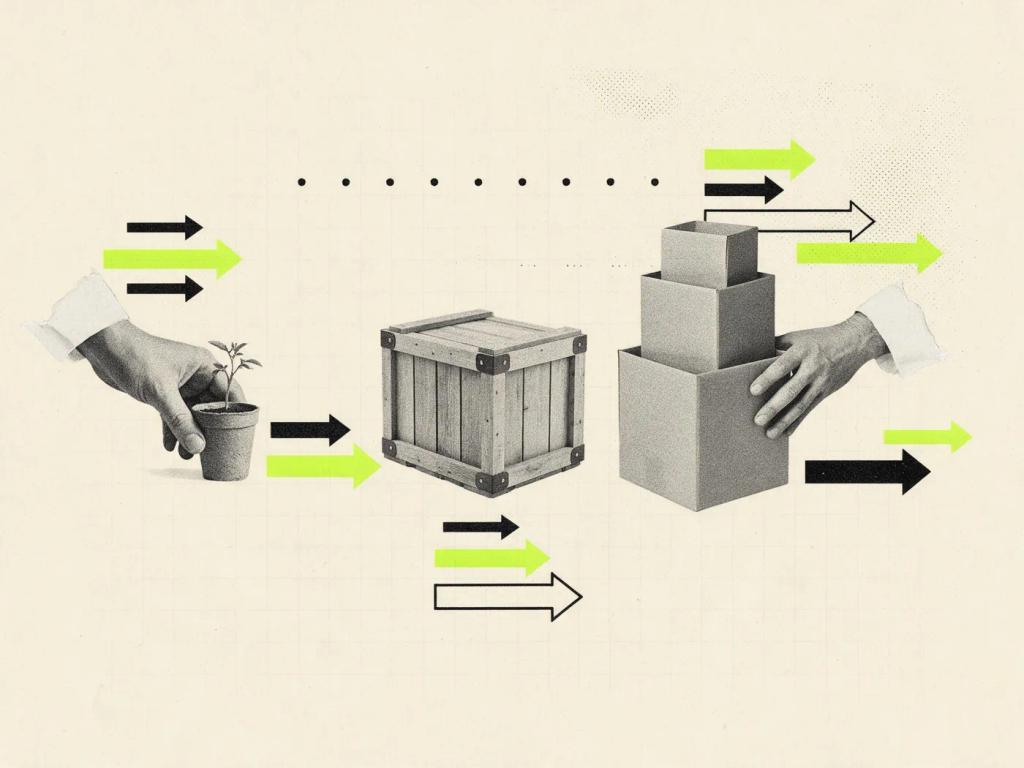

A startup website changes as the company grows. Before there's a product being sold, a well-made landing page is enough. After the first sales, the website has to support the sales conversation. From Series A on, it becomes an operation, with a blog, materials and pages the marketing team edits on its own.
The expensive mistake isn't spending too little or too much. It's spending on the wrong thing for the moment. A pre-seed startup with ten pages burns money it will miss six months later. A Series A startup with a lone landing page loses deals because it has nowhere to support the conversation. This article breaks down what each stage needs, based on what we see in the projects that come through here.
What does a startup need on its website at each stage?
The right question isn't how many pages. It's what decision the visitor needs to make after reading. At first, the decision is whether this makes sense for them. Later, it's trusting you enough to talk. Further on, it's being able to learn on their own until they're ready to buy. Each of these decisions calls for a different structure.
Stage | What the website needs to do | Minimum structure |
|---|---|---|
Pre-seed | Explain the problem and prove there's someone serious behind it | One page |
Seed | Support the first sales conversation without you in the room | 3 to 5 pages, defined brand |
Series A and beyond | Generate demand and educate on its own, at scale | Website with CMS, blog and materials |
Notice the table never mentions technology. The platform is a consequence, not a starting point. What really changes is how much weight the website carries in the company's sales operation.
Pre-seed: is a well-made landing page enough?
It is, and that's our recommendation for anyone who hasn't sold yet. A page that explains the problem, shows the solution and gives a clear next step covers everything a company at this stage needs from its website. Investing in ten pages before you know what works is buying structure for a company that's still going to change.
What the page needs is short: what problem, for whom, why now, who's behind it and how to reach you. If that doesn't fit on one page, the problem isn't the page. It's that the positioning isn't clear yet, and no layout fixes that. For how to organize this structure, see the structure that makes visitors understand the offer in 5 seconds.
There's data behind this caution. According to CB Insights' March 2026 analysis of 385 startups that shut down, lack of product-market fit shows up in 43% of cases, second only to running out of money, which is usually a consequence rather than a cause. A website that can't explain the problem it solves is a symptom of the same illness.
Seed: the website that supports the first sales
Here the website stops being a business card and starts working. The company is already selling, already has some proof, and needs the page to take on part of the work that used to fall entirely on the founder. This is when three to five pages make sense: what the product does, for whom, proof that it works and how to get started.
It's also the stage when brand and website are often born together. Projects like Spedy, Stric and Elogiou came in this way: visual identity and website built in the same push, because the company needed to look like a company before the next conversation happened. Doing the two separately, months apart, usually costs more and ends up less coherent.
What really changes at this stage is the demand for consistency. A seed startup talks to investors, customers and candidates in the same week, often on the same page. A website that speaks well to one and poorly to the other two costs opportunities nobody tracks.
Series A and beyond: when the website becomes an operation
With budget and a team, the website stops being a project and becomes a channel. It needs a CMS so marketing can publish without depending on anyone, a blog for content, resource pages and, in many cases, more than one language. The work shifts from building to maintaining at the team's pace.
Projects like Visor and Pepper show the next step: beyond the website, custom software, an app and a blog living side by side. This is the point where the conversation stops being about pages and becomes about product. Anyone who gets here should read about the moment the website stops being a showcase before asking for a quote, because the question changes.
It's also the stage when the nature of the website's structure changes. A pricing page, documentation and a changelog become mandatory, and that's what separates a corporate website from when the startup becomes a product and the website needs pricing and docs.
It's also when demand shows up for occasional support instead of a fixed-scope project. The company already has a designer, but no slack. In these cases it makes more sense to reinforce a design team that already exists inside the company than to hire an agency to run everything. And when the product itself needs to evolve, the discussion is a different one: getting an MVP off the ground without breaking at scale.
Why do so many startup websites look the same?
Because they copy the same reference. The American startup aesthetic became a pattern that reproduces itself: dark gradient, three benefit columns, isometric illustration, vague headline at the top. The result is a website that could belong to any company, which is exactly the opposite of what an unknown company needs.
Copying a foreign reference has a specific cost in Brazil: the vocabulary doesn't match. Terms that work in a market with an established category sound empty in a market where nobody yet knows the problem has a name. The website needs to name the problem before naming the solution, and that can't be imported from anywhere.
Common startup website mistakes
These three show up in most of the startup briefs that reach us, and all of them cost more to fix than to avoid.
Explaining the technology instead of the problem. The website describes architecture, integrations and features, and the visitor leaves without understanding what the company solves. Technology is the answer to a question the website hasn't asked yet.
Copying the American startup aesthetic. Imported layout and language that say nothing about that particular company.
Promising a product that doesn't exist yet. The website sells the roadmap, the customer arrives and finds something else. It costs trust at the very stage when trust is the only asset.
How to show traction without making up numbers
A new startup almost always has little to show, and the temptation to inflate is strong. It doesn't pay off. An inflated number can be checked and destroys exactly the trust the website exists to build. The honest path is to show what really exists, precisely.
What works well: customer names with permission, even if few; the problem solved described with the customer's numbers, not yours; who's on the team and what they've done before; and the product running. That last one is the most underrated. A short video showing the product running convinces more than any adjective, and the tool that raised that bar is in the Screen Studio review for anyone presenting a digital product.
What doesn't work: logos of companies that only ran a trial, metrics with no stated basis, and generic testimonials with no name or title. People who buy software know how to read these signals and discount all of them.
Which platform should you choose at each stage?
In our experience, the same one works from start to finish. We build in Framer from the first landing page to the large CMS-driven website, and the startup doesn't need to switch platforms midway. That matters more than it seems: a migration takes weeks and usually happens right when the company has the least time to spare. Framer's official pricing page, checked in September 2026, shows the reach of this range: the mid-tier plan covers 150 pages and 10 content collections, with extra capacity sold separately up to 700 pages.
The deciding criterion isn't technical, it's operational. Who's going to edit the website later? If the answer is the marketing team, the platform needs to allow that without a developer. If the startup has an engineering team with spare capacity, other options come into play. Which platform lets the marketing team edit on its own is the question that settles the choice in practice.
How much does a startup website cost and how long does it take?
A well-executed landing page starts at around US$ 2,000. A full corporate website goes up to US$ 8,000, depending on the number of pages with their own layout, who writes the copy and how much of the motion is custom-built. The timeline for a corporate website is 4 to 6 weeks, and a single page ships much faster.
For a startup, the most useful data point isn't the price, it's the order. Buying the next stage's structure too early is the mistake that wastes the most funding-round money. The full breakdown by project type is in how much each of these three stages costs. The time between the brief and the website going live depends more on content than on building.
Frequently asked questions
Does a pre-seed startup need a website?
It needs a page, not a website. Its job is to explain the problem, show who's behind it and open a conversation. Investing in a full structure before validating the product is spending on something that will probably change in the coming months.
Is a landing page or a corporate website the better choice?
It depends on how many questions the visitor needs answered before talking to you. One question, one page does it. Five different questions, from different audiences, call for a website. The number of pages follows the sales conversation, not the available budget.
Does a startup website need to be in English?
Only if the buying audience is outside Brazil. An English website for selling in the domestic market pushes away more than it attracts, because it sounds imported. If both audiences exist, the way to go is two real languages, and that has its own platform and maintenance cost.
When should a startup redo its website?
When the website starts explaining a company that no longer exists. That usually happens after a funding round, a positioning change or when the product shifts to a new audience. Redoing it for taste, without any of these triggers, rarely moves business numbers.
How long does a startup website take?
A single landing page is ready in a few days of actual work. A corporate website of medium complexity takes 4 to 6 weeks from brief to launch. What stretches the timeline is almost never the build, it's the client's content and the approval time for each stage.
If your startup is deciding what to put on its website right now, it's worth talking to Wama about your startup's website. More than 200 projects delivered, many of them with brand and website born in the same push.